
OnlineCounselingPrograms.com is owned by 2U, LLC, parent company of edX. Our goal is to help learners make confident, informed decisions about their education and career. Some programs shown here are offered by universities that partner with 2U, for which 2U provides marketing and operational support and receives compensation. Other programs shown may be paid advertisements from third parties. Both types of programs are identified with the word AD or Advertisement. We aim to keep information current and accurate. Learn more about edX and our partners.
Mental Health Career Paths: Counseling vs Therapy vs Psychology
Which mental health profession is right for me? Can I provide therapy as a counselor? Will I need a master’s degree to work as a school counselor? Do psychiatrists only work with severe mental illness? These are common questions for people exploring the helping professions.
Oftentimes, the terms counseling and therapy are used interchangeably. Public perception of the two terms varies, while the other delves deeper into the root causes of behavior. However, both terms refer to services provided to individuals seeking guidance and assistance with their social, emotional, and mental health needs.

Table of Contents
Explore what Counseling, Therapy and Psychology Careers have to offer. On this page you will be able to identify the disparities among these careers and dive deeper into the various fields that may interest you. Read more about the multiple career paths and prepare to take the next step in advancing into a profession.
Counseling Careers
Individuals who pursue a career in counseling often become one of the following: licensed professional, clinical mental health, school, rehabilitation, substance abuse, or pastoral counselor to name a few.
Therapy Careers
Therapy in the mental health field can be considered an overarching term that includes different types of approaches to meeting with clients. However, the term is not definitive of the level of competence a mental health professional will have.
Psychology Careers
Psychologists are trained to perform assessments, make diagnoses, and provide therapy to individuals & groups. The different types of concentrations determines the title of a psychologist to include population and locale of practice.
Social Work Careers
Social workers provide social services and resources to people and communities who need help coping with the problems impacting their lives. Clinical social workers diagnose and provide treatment for mental health issues.
Counseling Careers
Licensed Mental Health Counselor (LMHC)
What do licensed mental health counselors do?
Mental health counselors provide client-centered therapy through a combination of psychotherapy and a problem-solving approach to facilitate change and problem resolution. The American Mental Health Counselors Association (AMHCA) summarizes the services offered by LMHCs, including assessment & diagnosis, psychotherapy, treatment planning, brief- and solution-focused therapy, alcohol and substance abuse treatment, psychoeducational and prevention programs, and crisis management.
Who do licensed mental health counselors work with?
Licensed Mental Health Counselors also work with other mental health professionals in collaboration for the health and benefit of their clients.
How to Become a Licensed Mental Health Counselor
Professional counseling is regulated at the state level, so titles, degree standards, examinations, and supervised experience requirements vary by jurisdiction. In general, becoming licensed as a clinical mental health counselor (LMHC) or professional counselor requires a qualifying graduate degree and state licensure. Explore mental health counseling programs.
Licensed Professional Counselor (LPC)
Become an LPC with one of our sponsored online psychology programs
Pepperdine University • Malibu, CA
Master of Arts in Psychology
Program Type
Master's
Enrollment Type
Full-Time and Part-Time
Delivery Mode
Online
Length of Program
As few as 18 months
Credits
36-48
Admission Requirements
- Bachelor’s degree from a regionally accredited institution
- Official transcripts
- Two letters of recommendation
- Statement of purpose

What do professional counselors do?
Licensed Professional Counselors (LPCs) provide counseling and related mental health services, including assessment, treatment planning, psychoeducation, consultation, and therapy, subject to state law and scope of practice.
Who do professional counselors work with?
LPCs work with individuals, families, and groups to address mental, behavioral, and emotional problems and disorders. The Licensed Professional Counselors Board of Examiners summarizes that LPCs are licensed to provide mental health counseling and psychotherapy services independently to the public.
How to Become a Licensed Professional Counselor
Similar to LMHCs, licensed professional counselors (LPCs) must be licensed and hold a master’s degree in counseling or a related field, and must obtain licensure to practice. Supervised clinical work is typically required to get your LPC license. Each state will have different licensing, certification, and clinical experience requirements. Make sure to check with your state’s licensing board.
Northwestern University • Evanston, IL
Master of Arts in Counseling
Program Type
Master's
Enrollment Type
Accelerated and Full-Time and Part-Time
Delivery Mode
Online
Length of Program
As few as 18 months
Credits
60
Admission Requirements
- Transcripts
- Letters of recommendation
- Resume
- Statement of purpose
- Supplemental essay
- Recent photo

Substance Abuse/Addiction Counselor
What do substance abuse counselors do?
The Bureau of Labor Statistics (BLS) summarizes the role of substance abuse counselors to advise people on a range of issues, such as those relating to alcoholism, addiction, or depression. Substance abuse/addiction counselors evaluate a client’s mental and physical health to assess readiness for treatment.
Who do substance abuse counselors work with?
Helping to define goals and treatment plans, substance abuse/addiction counselors work with clients to develop the skills and behaviors necessary for recovery from addiction or to modify behavior. These counselors also educate families about addiction and the process of recovery.
How to Become a Substance Abuse Counselor
Depending upon the locale and place of practice, substance abuse counselors may have a bachelor’s education, while others earn licensure after completing a recognized master’s degree program.
School Counselor
What does a school counselor do?
School counselors engage in activities that promote equity and equal access to educational experiences for all students through leadership, advocacy, and collaboration to support a safe learning environment.
Who does a school counselor work with?
School counselors address the needs of all students through a culturally relevant lens and integrate intervention programs into the comprehensive school counseling program.
How to Become a School Counselor
School counselors are required to obtain an advanced degree, such as a master’s degree in school counseling. In some states, according to the American School Counselor Association (ASCA), you must have teaching experience before becoming certified in school counseling. Check ASCA’s state certification requirements page and your state department of education website.
School counseling and school social work share similarities, such as working with students to identify learning challenges and develop solutions. However, there are some key differences between what a school counselor and a school social worker do. The requirements to become a school counselor differ from those to become a school social worker. Each state has its own school counselor licensing requirements.
School counselor requirements vary by state. ASCA says licensure or certification typically requires a master’s degree in school counseling education and coursework, practicum and internship experiences in a K–12 setting, and, where required, passage of a state or national exam. Some states may also impose additional requirements. Explore the differences between school social work and school counseling.
Sponsored Online School Counseling Programs
University of Denver • Denver, CO
Master of Arts in School Counseling
Program Type
Master's
Enrollment Type
Full-Time and Part-Time
Delivery Mode
Online
Length of Program
As few as 24 months
Credits
72 quarter credits
Admission Requirements
- Bachelor’s degree from a regionally accredited institution
- Cumulative 2.5 on a 4.0 scale or a 2.5 on a 4.0 scale for the last 60 semester credits or 90 quarter credits
- Two letters of recommendation
- Current resume
- Unofficial transcripts from all postsecondary institutions you attended; if admitted, official transcripts will be required
- Statement of professional goals
- Diversity statement

Therapy Careers
Licensed Therapist
Different Kinds of Therapists
There are many types of therapy careers, including:
- Psychotherapists
- Marriage and family therapists (MFT)
- Applied behavioral analysis (ABA) therapists
- Recreational therapists
- Child therapists
- Cognitive behavioral therapists (CBTs)
How to Become a Licensed Therapist
To become a licensed therapist, you’ll need to complete educational, experience, exam, and licensure requirements. Each state’s requirements may vary depending on the type of therapist role you want to pursue.
Licensed Marriage and Family Therapist (LMFT)
What do marriage and family therapists do?
They address issues common in those types of relationships. According to the American Association for Marriage and Family Therapy (AAMFT), marriage and family therapists treat a wide range of clinical problems and are licensed to diagnose and treat mental and emotional disorders within the context of marriage, couples, and family systems. LMFTs commonly work with issues such as depression, marital problems, anxiety, psychological concerns, and child-parent problems. Therapy approaches for LMFTs involve a holistic, brief, and solution-focused approach with attainable therapeutic goals. Comparing LMFT vs. mental health counselor (LPC) roles, LMFTs work specifically with individuals, couples, and families, with a particular focus on relationship and family dynamics.
Who do MFTs work with?
Marriage and family therapists address clinical concerns with individuals, couples, and families. s. MFTs discuss the individual's role within marital or family dynamics and how it might influence the presenting concern. MFTs assess, diagnose, and treat mental health disorders. The difference between marriage and family therapists vs. psychiatrists is that psychiatrists can prescribe medication for mental disorders, while MFTs generally cannot.
How to Become an MFT
To become an MFT, individuals must pursue a master’s degree in marriage and family therapy or a related mental health field, complete supervised clinical experience, and apply for licensure through their state board. Once you become an MFT, you may pursue certifications to specialize in a certain population or gain expertise in a type of marriage and family therapy method.
Board-Certified Behavior Analyst (BCBA)
Education Requirements for BCBAs
Aspiring board-certified behavior analysts generally must obtain a master’s in applied behavior analysis or another relevant field. Application requirements vary by ABA master’s program but may include a resume, letters of recommendation, and a personal statement.
What do BCBA therapists do?
BCBA therapists influence an individual’s behavior through applied behavior analysis (ABA). ABA therapy focuses on improving specific behaviors, such as learning, socializing, communication, and occupational competence.
Who do BCBA therapists work with?
BCBA therapists work with those who have mental health issues, developmental disabilities or special needs, like autism. They may work in environments such as schools, hospitals and nonprofits.
How to Become a BCBA
To become a behavior analyst, you’ll need to take and pass the BCBA exam. First, you must meet certain educational, experience, and exam requirements.
Psychology Careers
There’s a wide variety of specialty careers in psychology you may pursue. Getting a master’s degree in psychology may be a good way to launch a career in the field. Another option is a doctoral degree in psychology, which is typically a requirement to become a licensed psychologist.
Clinical Psychologist
Education Requirements for Clinical Psychologists
Clinical psychologists are required to have a doctoral degree in psychology, which can be a PsyD or PhD. While a master’s in clinical psychology is typically not required to apply for a psychology doctoral program, some doctoral programs may require applicants to have a psychology master’s degree. After obtaining their doctorate, clinical psychologists are trained to provide individual and group therapy and other clinical services such as assessment and diagnosis.
What do clinical psychologists do?
Providing mental and behavioral health services in health care, social care, and other clinical settings, clinical psychologists use scientific approaches to focus on prevention, health disparities, reducing psychological distress, and enhancing psychological well-being.
Who do clinical psychologists work with?
The American Psychological Association (APA) describes the role of psychologists as including the following: assessment, diagnosis, collaboration with an interdisciplinary team, creating and monitoring programs of treatment, offering therapy, rehabilitation of clients into the community, developing programs for behavioral and mental health services, consulting with other professionals and staff, and conducting evidence-based research.
A main difference between therapist vs. clinical psychologist roles is that clinical psychologists typically have a doctoral degree and may provide additional services such as consultation, training, education, supervision and clinical research.
How to Become a Clinical Psychologist
To become a psychologist, you’ll need education, an internship, and, in some states, a supervised postdoctoral experience, and a psychologist license. Check requirements in the state where you want to work.
Behavioral Psychologist
Education Requirements for Behavioral Psychologists
Behavioral psychologists typically need to have a doctoral degree in psychology. Some choose to pursue a master’s in psychology or a related field as preparation for doctoral study.
What do behavioral psychologists do?
Behavioral psychologists help patients modify behavior. They use research-backed approaches and techniques, including therapy, education, and monitoring.
Who do behavioral psychologists work with?
Behavioral psychologists work with a variety of patients, ranging from children to adults, in settings such as research centers and mental health clinics, and serve as expert witnesses in court cases. They might also work as consultants with organizations.
School Psychologist
Education Requirements for School Psychologists
School psychologists typically earn a doctorate or specialist-level degree in psychology, diagnose, and provide therapy, much like their clinical counterparts. School psychologists, however, work with parents, teachers, and school staff to address students' developmental needs and to develop Individual Education Plans (IEPs).
What do school psychologists do?
The National Association of School Psychologists (NASP) states that school psychologists help schools to improve academic achievement, promote positive behavior and mental health, support diverse learners, create a safe and positive school climate, strengthen family-school partnerships, and improve school-wide assessment and accountability for student progress in academics and behavior.
Who do school psychologists work with?
Collaborating with other student support staff, such as school counselors and other school-based professionals, in school settings, school psychologists work to promote students’ overall behavioral and mental health
How are school psychologists different from school counselors? Learn more in our comparison guide: School Counselor vs. School Psychologist
Educational Psychologist
Education Requirements for Educational Psychologists
Like most psychologists, educational psychologists have a doctoral degree in psychology. There are doctoral degrees in educational psychology that students might pursue, focusing specifically on psychology in an educational setting. There are also master’s degrees in educational psychology available to prepare aspiring educational psychologists.
What do educational psychologists do?
Educational psychologists apply psychological principles and techniques to improve school and student outcomes. Educational psychologists focus on improving learning methods and the instructional process.
Who do educational psychologists work with?
Educational psychologists may work with students to treat learning problems. They may also consult school-based professionals to improve learning, teaching and administrative strategies.
Counseling Psychologist
Education Requirements for Counseling Psychologists
Working with all types of populations and organizations, including businesses, counseling psychologists typically earn a doctoral degree in psychology, like a PysD or PhD. There are also master’s degrees in counseling psychology that, while they do not lead to psychological licensure, may lead to counseling licensure.
What do counseling psychologists do?
This profession also provides assessment, diagnosis, and treatment of psychological distress and maladjustment. The American Psychological Association (APA) further identifies counseling psychologists as engaging in individual, group, and family counseling and psychotherapy, providing services such as crisis intervention, trauma and disaster management, and consulting with organizations, as well as conducting program evaluation and tracking client progress.
Who do counseling psychologists work with?
As general practice and health service providers, counseling psychologists address the emotional, social, work, school, and physical health concerns of individuals and focus on how people function both personally and within their relationships.
Health Psychologist
Education Requirements for Health Psychologists
Health psychologists typically need a doctoral degree in psychology. Psychology doctoral programs may require a master’s degree in psychology.
What do health psychologists do?
Health psychologists study how people handle illness. They work with patients to improve health and pain management, and to develop healthcare strategies that enhance patient outcomes.
Who do health psychologists work with?
Health psychologists may work with patients in medical settings such as hospitals and with healthcare administrators and professionals, such as medical doctors.
How to Become a Health Psychologist
To become a health psychologist, there are educational, practice and licensure requirements. Each state will have its own licensure requirements.
Psychiatry Careers
Those who pursue a career in psychiatry receive medical training to become doctors who can prescribe medication based on mental and physical assessments of clients.
Psychiatrist
What is psychiatry?
Psychiatry is a branch of medicine that is focused on mental health that include substance use disorders.
What do psychiatrists do?
The American Psychiatric Association (APA) states that psychiatrists are physicians who are educated and trained through a medical pathway to focus on diagnosis, treatment, and prevention of mental, emotional, and behavioral disorders, which include physical aspects of psychological concerns. Often, psychiatrists prescribe medications in combination with the therapy they offer.
Education Requirements for Psychiatrists
After completing medical school, psychiatrists complete four years of psychiatry residency. During residency, they train in both general medicine and psychiatry.
Social Work Careers
Social workers can make diagnoses, provide individual and group therapies, and provide case management and advocacy on behalf of their clients.
Licensed Master Social Worker (LMSW)
What is the role of social workers?
Licensed master social workers work with people and communities in need of help. They research and refer clients to resources that improve their well-being. LMSWs may also respond to crisis situations, develop social work programs and advocate for disadvantaged communities.
Where do social workers work?
LMSWs work in a variety of settings, including nonprofits, government agencies, schools, hospitals, substance abuse facilities and community centers.
Education Requirements for Social Workers
Social worker licensure typically requires a social work degree from a program accredited by the Council on Social Work Education (CSWE), though specific requirements vary by state.
How to Become a Licensed Master Social Worker
To become a licensed master social worker, a social worker must meet the state's licensure requirements. Typically, these include education, application, and/or exam requirements. Because social work license titles and requirements vary by state, the LMSW title is not used in every jurisdiction.
Licensed Clinical Social Worker (LCSW)
What is the role of clinical social workers?
Licensed clinical social workers help individuals, families, and groups increase their capacity for social functioning and advocate for societal conditions that support their communities. LCSWs help individuals address their own needs through psychosocial services and advocacy.
Where do clinical social workers work?
Social workers can be found in schools, hospitals, mental health clinics, senior centers, private practice, prisons, and in other agencies that address individual and family needs.
Education Requirements for Clinical Social Workers
Licensed clinical social workers are first educated through a Council on Social Work Education (CSWE)-accredited social work master’s degree program and then apply for licensure through their state board. The education requirements to become an LCSW are typically similar to those for master’s-level social work licensure, but the social work licensure requirements for an LCSW are different. When comparing social work vs. psychology careers, LCSW requirements will also differ.
How to Become a Licensed Clinical Social Worker
To become a licensed clinical social worker, you’ll have to meet education, experience, exam and licensure requirements set by the state board where you want to practice. Because license titles and requirements vary by state, applicants should verify the current requirements with their state social work board.
Ever wonder about the difference between counselors and social workers? Learn more in our comparison guide: Mental Health Counselor vs. Social Worker.
Although the disciplines of mental health professions vary, they all involve the advocacy and attention to the mental health needs and concerns of their clients, from all walks of life and in many different locales and practice settings. In determining which profession is right for you, take into consideration the importance of working with specific populations, the roles that you would like to play, and which setting you would like to practice in. There are many other specialties, certifications, endorsements, and licenses that are available to those seeking to become mental health professionals.
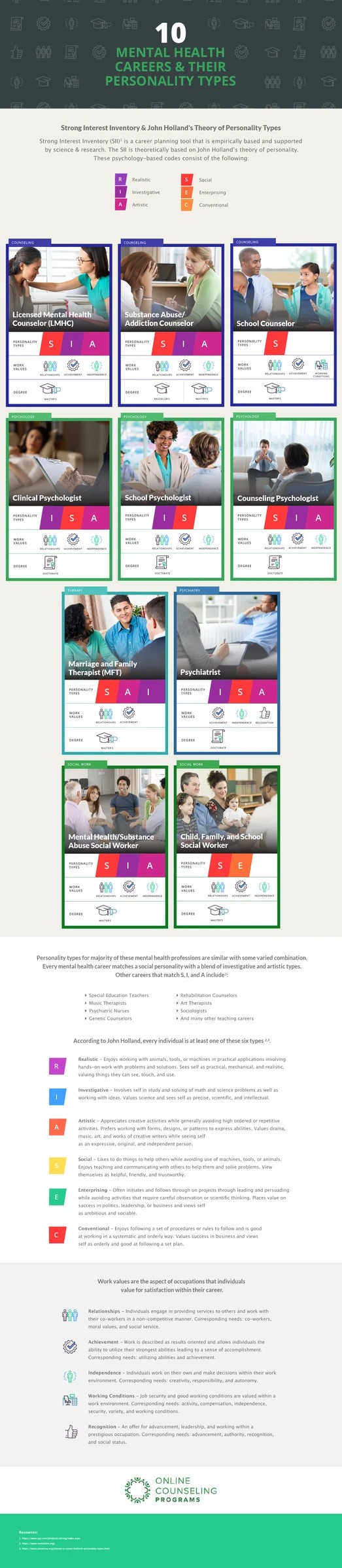
Icons made by Prosymbols from www.flaticon.com is licensed by CC 3.0 BY
Information last updated: April 2026