
OnlineCounselingPrograms.com is owned by 2U, LLC, parent company of edX. Our goal is to help learners make confident, informed decisions about their education and career. Some programs shown here are offered by universities that partner with 2U, for which 2U provides marketing and operational support and receives compensation. Other programs shown may be paid advertisements from third parties. Both types of programs are identified with the word AD or Advertisement. We aim to keep information current and accurate. Learn more about edX and our partners.
How to Become a Counselor in Vermont
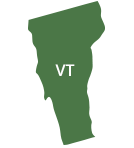
Counselors in Vermont who have completed their licensure are known as licensed clinical mental health counselors (LCMHC). The state’s premier professional organization for these professionals is the Vermont Mental Health Counselors Association, a state chapter of the American Mental Health Counselors Association.
Licensure is administered by the Vermont Secretary of State’s Office of Professional Regulation: Allied Mental Health. Licensure requirements for counselors in Vermont, including education, supervision, examination, fees, renewal, and licensure by endorsement, are detailed below.
Northwestern University • Evanston, IL
Master of Arts in Counseling
Program Type
Master's
Enrollment Type
Accelerated and Full-Time and Part-Time
Delivery Mode
Online
Length of Program
As few as 18 months
Credits
60
Admission Requirements
- Transcripts
- Letters of recommendation
- Resume
- Statement of purpose
- Supplemental essay
- Recent photo

Counselor Education in Vermont
Licensure as a clinical mental health counselor in Vermont requires an acceptable master’s or higher degree from an accredited educational institution and at least 60 graduate credits in clinical mental health counseling coursework. A 48-credit degree from an accredited school will be accepted, but must be supplemented to meet the 60-credit licensure requirement.
For non-CACREP degrees, applicants must complete coursework in diagnosis, assessment, and treatment; at least five of seven core areas; three graduate credits in multicultural studies, research and evaluation, and career development and lifestyle appraisal; and at least three graduate credits in at least two of the following: marriage, couples, and family counseling; human sexuality for counselors; crisis intervention; addictive disorders; and psychopharmacology.
Internship Requirements
In addition to the coursework listed above, Vermont licensure requires a 700-hour internship. No more than 100 hours may be practicum, and at least 600 hours must occur within a counseling or related degree. This requirement is distinct from post-degree supervision, which is also necessary for licensure in Vermont.
Supervision Hours
Supervision refers to post-master’s clinical mental health counseling practice completed under a clinical supervisor in a work setting. Vermont requires applicants to complete 3,000 hours of supervised practice over at least 2 years. This must include at least 2,000 hours of direct service, with the remaining 1,000 hours in either continued clinical practice or related services. Applicants must also complete no fewer than 100 hours of face-to-face supervision, with at least 50 hours in an individual setting
Examinations
Vermont requires a passing score on both the National Counselor Examination for Licensure and Certification (NCE) and the National Clinical Mental Health Counseling Examination (NCMHCE). Under Vermont’s current rules, examination results for first-time applicants must be obtained within five years of the final licensure decision.
The NCE is a 200-question, multiple-choice examination administered by the National Board for Certified Counselors. It assesses knowledge, skills, and abilities in effective counseling services.
The NCMHCE is designed to assess the knowledge, skills, and abilities considered important for providing effective counseling services. It is also administered by the National Board for Certified Counselors.
CMHC Licensure Fees
Vermont counselors can expect to pay the following fees for their license, application, and renewal:
- Clinical Mental Health Counselor Biennial Renewal: $175
- Clinical Mental Health Counselor Application: $230
CMHC License Renewal
Vermont clinical mental health counselor licenses are renewed on a biennial schedule, currently set to expire on January 31 of odd-numbered years. Renewal applications open six weeks before expiration. Under Vermont’s initial licensing policy, an initial license issued 90 days or less before the renewal date is valid through the next full two-year renewal period.
Vermont also allows a 90-day provisional license in certain cases when all application requirements are complete except official verification of licensure.
Continuing Education
Clinical mental health counselors in Vermont must complete 40 hours of continuing education with the first renewal application after two years of licensure and during each subsequent renewal cycle. Only continuing education completed within two years of the renewal date counts.
Vermont requires that at least 4 of the 40 hours be specifically designated to professional ethics, and the remaining 36 hours must be in the theory and practice of clinical mental health counseling. CE may be earned through eligible formal activities, including graduate academic courses, institutes, workshops, seminars, and conferences approved by the Board.
Licensees may also earn credit through eligible individualized learning activities, but no more than 28 hours per renewal period may be earned in that category. Individualized learning may include approved home study or online training, teaching or consultation, and supervision.
Additional Information
For Counselors Licensed in Other States
Vermont offers licensure by endorsement for applicants who are independently licensed or certified and in good standing in another U.S. or Canadian jurisdiction with standards the Board considers substantially equivalent to Vermont’s.
Vermont also has a five-year active-practice pathway for applicants who have been licensed or certified to practice independently, have no disciplinary history, and have actively practiced clinical mental health counseling for at least five years before applying.
Separately, the Vermont Office of Professional Regulation offers a Fast Track Endorsement option for professionals who have been fully licensed to practice independently in another state for three or more years immediately preceding the application.
Average Counselor Salary in Vermont
Vermont counselors may earn the corresponding annual median wages, according to the May 2024 U.S. Department of Labor, Bureau of Labor Statistics, Occupational Employment Wage Statistics Maps: Vermont.
Type of Counselor | Average Annual Wage |
|---|---|
Marriage and Family Therapists | $61,060 |
Educational, Guidance, and Career Counselors and Advisors | $60,920 |
Substance abuse, behavioral disorder, and mental health counselors | $60,140 |
Rehabilitation Counselors | $49,620 |
Counselors, All Other | $52,590 |
Vermont Counseling Scholarships
The following scholarships, forgivable loan programs, and loan repayment opportunities may be available to aspiring professional counselors in Vermont:
Vermont Mental Health Professional Forgivable Loan Incentive Program
- Type: Forgivable Loan Program
- Amount: Varies by funding cycle
- Description: This Vermont program provides forgivable loans to students enrolled in a master’s program in a mental health field who commit to working as a mental health professional in Vermont after licensure. In general, recipients must agree to work in Vermont for at least one year for each year of funding received. This is one of the most relevant Vermont-specific funding options for future counselors.
- Type: Scholarship
- Amount: Varies by scholarship
- Description: The Vermont Student Assistance Corporation administers more than 150 scholarships for Vermont residents and also publishes additional scholarship opportunities. While these awards are not limited to counseling students, Vermont graduate students pursuing counseling or related helping professions should review them for potential fit.
Vermont Care Partners Education Investment Program (VEIP)
- Type: Tuition Assistance / Loan Repayment Program
- Amount: Varies by employer and funding cycle
- Description: VEIP supports health care professionals working at Vermont’s designated and specialized service agencies through tuition assistance and loan repayment. It can be especially useful for counseling graduates planning to work in community mental health or related public service settings in Vermont.
NBCC Foundation Rural Scholarship
- Type: Scholarship
- Amount: Varies by award cycle
- Description: This national scholarship supports full-time students in CACREP-accredited master’s counseling programs who live in rural areas and plan to provide counseling services in rural communities after graduation. It may be a strong option for Vermont students, given the state’s many rural communities.
NBCC Foundation Minority Fellowship Program for Mental Health Counseling
- Type: Fellowship
- Amount: Varies by award cycle
- Description: This fellowship supports master’s-level counseling students who are committed to serving historically underserved communities. It may be a good fit for Vermont students interested in community mental health, social justice, and reducing disparities in access to care.
NBCC Foundation Military Scholarship
- Type: Scholarship
- Amount: Varies by award cycle
- Description: This scholarship supports service members, veterans, and military spouses pursuing a master’s degree in counseling and planning to serve military-connected populations. Vermont students with military ties may find it especially relevant.
National Health Service Corps Loan Repayment Program
- Type: Loan Repayment Program
- Amount: Up to $50,000 for an initial two-year full-time term
- Description: After graduation and licensure, counselors working at approved NHSC sites in shortage areas may qualify for federal loan repayment. This is a useful option for Vermont counseling graduates planning to work in underserved communities.
*Last updated March 2026: Licensure information and other details may have changed since this article was published. Candidates should always confirm requirements directly with the Vermont Office of Professional Regulation and the Board of Allied Mental Health Practitioners before applying. For current details on scope of practice, education, supervised experience, continuing education, renewal, and endorsement, review the Vermont Board of Allied Mental Health Practitioners Administrative Rules (PDF, 335 KB) and the Vermont Allied Mental Health Apply & Renew page.
g for more information.
Information last updated: August 2026